


There's a framework every creator eventually learns. Know, Like, Trust. Your job is to get people to know you, then like you, then trust you - and then to turn them into one of your 1,000 true fans. Once you've done that, the theory goes... they'll buy from you, follow you, tell their friends about you. And that framework works.
But it's those same mechanics that make the work of being a creator dangerous.
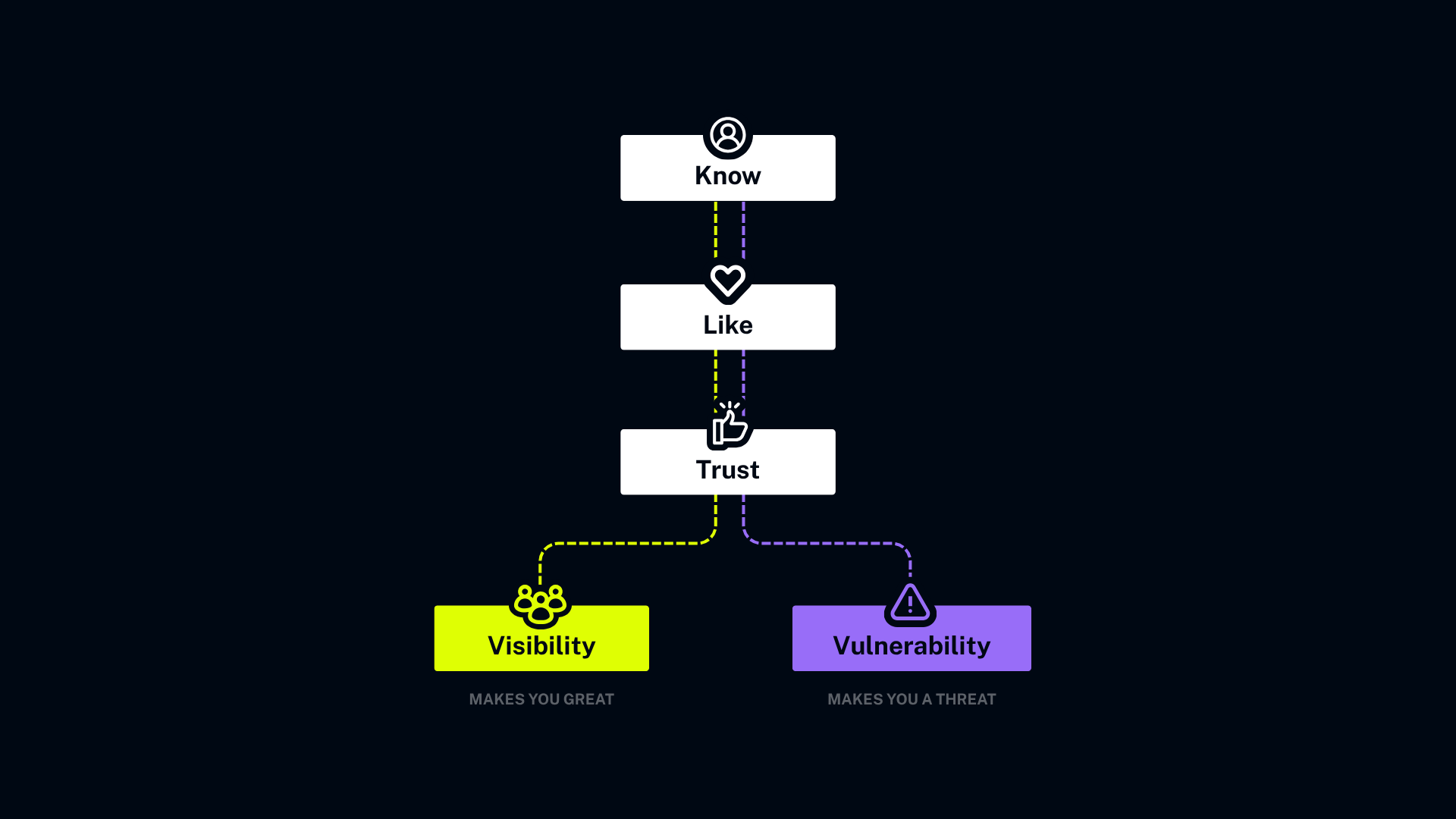
That's the part that nobody tells you when you're building your platform. The same skills that make you an amazing creator - the vulnerability, the consistency, the intimacy you build with strangers over time - are the exact skills that can attract someone who mistakes that connection for something it isn't.
The better you are at the know, like, trust game... the more dangerous your job gets.
We want to grow our visibility, without increasing our vulnerability - but they mostly go together. And we don't want them to.
Welcome to the Parasocial Paradox.
Know, like, and trust is the creator playbook. It's also the first three stages of a stalker's relationship with you.
Your job is to take strangers and make them feel connected to you. But the content that builds your best fans builds your worst ones too - the skill doesn't discriminate. You can't aim it selectively at the safe people and withhold it from the unsafe ones. The same post that turns a stranger into a true fan can turn a different stranger into a threat. The only difference is what they can do with the feeling you gave them.
You can't build one without the other. That's not a tradeoff - that's the paradox.
What "parasocial" actually means
You probably already know what a parasocial relationship is, even if you've never used the word.
It's the one-way relationship your audience has with you.
They know what you had for breakfast. They know your dog's name. They know how you take your coffee, what your last breakup cost you emotionally, and what you think about people who don't tip at coffee shops. To them, you're a friend.
And you have no idea who they are.
That's not a criticism of the model. That IS the model.
The asymmetry of the relationship isn't a bug... it's how the system is designed. The deal is that you share your life (or at least, a curated part of it), and in return, people feel connected to you. That connection is what makes them show up, subscribe, buy, and recommend you to friends. It's the engine of everything you're building as a creator.
And you build that relationship intentionally. You curate it. You spend a huge part of your days and weeks thinking about how to make that relationship stronger, or how to build it with more people. What is a conversion rate if not a quantifiable way to see how effective you are at building that relationship?
The problem isn't that the relationship is one-sided. For most people in your audience, that's fine. They understand that it's a one-sided relationship too. And your audience is happy to know you from a distance.
Most people.
When parasocial goes too far
For a small percentage of your audience, the intimacy you've built doesn't read as "creator I enjoy following." It's closer to "person I have a relationship with," or "my friend, Creator X."
It's not actually that surprising. For some of the creators we follow, we hear from them more than we talk to family members or friends in the real world. You might hear from your favorite TikTok creator 5-10 times a day - can you say that about your actual friends?
Those people comment on everything. They notice when you haven't posted. They feel hurt when you work with someone they don't like. They feel entitled to know things you haven't shared - and sometimes, they want that info bad enough, they'll go looking.
Maybe they start out as a true fan, and then... gradually, a little bit at a time, they start to tiptoe over the line. Maybe it's an overly effusive DM that makes you just a little uncomfortable. Maybe it's your home address showing up on Reddit. Maybe your mom gets a phone call from someone pretending to be a friend to get your phone number.
That last one happened to a colleague of mine. She had around 20,000 subscribers on YouTube - a niche audience, nothing that would make her feel like a target. She'd been told (and she believed) that she wasn't big enough to worry about this stuff. But she was wrong.
Because you don't have to be famous for this to happen - you just have to be good at building connections. And if you're a decent creator, that's a core skill.
Here's what surprises people, though - you don't have to be emotionally vulnerable to be exposed. A creator who never talks about their feelings but posts daily from the same coffee shop, mentions their neighborhood, shows their kid's school in the background, or establishes a recognizable routine - has handed over significant access and info without sharing a single personal feeling. The risk isn't just about intimacy, it's about information. And most creators are sharing way more than they realize, in ways they'd never think to categorize as a risk.
All creators don't fall into the same risk bucket. A creator with 8,000 subscribers who does long-form, emotionally honest content about navigating a divorce can attract more of this energy than a creator with 500,000 subscribers posting product reviews. Scale matters, but it's not the only variable. The depth of the connection you build, the vulnerability you share, the intimacy of your format - these are all just as relevant to your level of risk as your follower count.
Want to figure out your specific risk level as a creator?
That's what the Creator Risk Profile is for.
But... the creator economy doesn't talk about that part when they're handing out advice about "authentic storytelling."
The flip side of know, like, trust
Here's the version of that framework that you don't see in marketing courses:
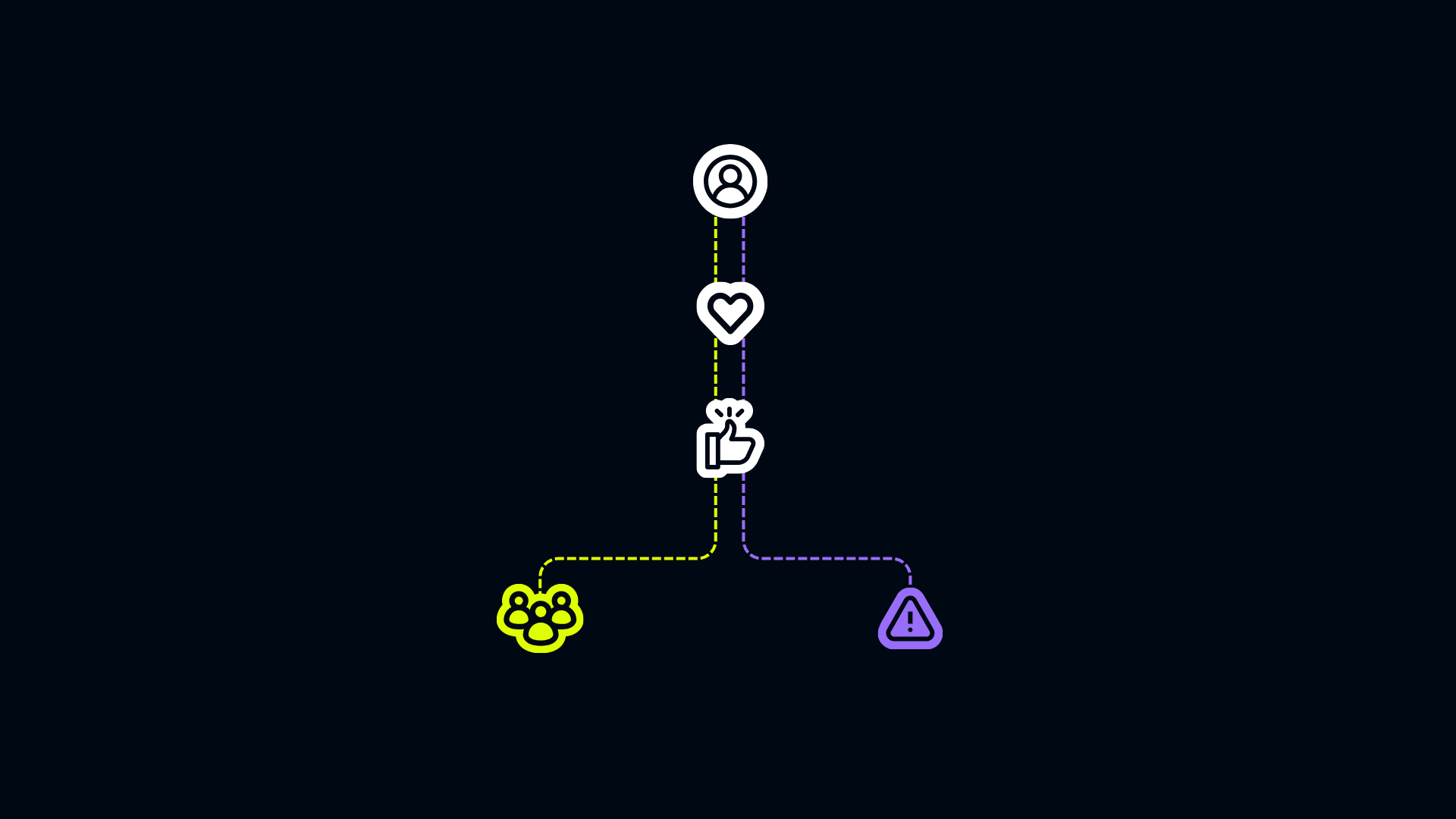
Know you means they know your routines, your location patterns, your family situation, what you look like without makeup, where you live... because you told them. Or close enough to it.
Like you means they feel warmly toward you in a way that, for some people, tips into possessiveness. You're theirs. Your audience is their community. Your attention is something they feel owed.
Trust you means they believe the version of you they've constructed in their heads is real. When something disrupts that version, they react like a friendship has been violated. Because to them, it has.
This isn't the majority of your audience (not even close). But this dynamic exists in every audience above a certain size, and it shows up earlier than most creators expect.
So the question isn't whether this dynamic is in your audience. If you've been intentionally building a platform, it is. The question is whether you understand it.
Platforms built the dynamic
Infuriated? Me too. Platforms know this dynamic exists and they built it intentionally. The algorithms reward consistency, vulnerability and intimacy. And they're working exactly as they were designed to. The more you share, the more you post, the more intimate the connection you build with your audience... and the better the platforms perform.
So, they don't see the value in solving the creator safety problem.
(Shocking, given how much they profit from the problem existing)
Instead, they put it on you, the creator.
That's a broken system, and until it isn't, you're the one who has to understand the model you're operating inside.
This isn't a reason to stop posting
The answer isn't to post less, share less, or soften the parts of your content that make it good. The vulnerability and intimacy that drive the danger are also what make your work worth following. You can't have one without the other and you don't actually want to.
What you can do is understand the mechanics of the relationship you're building - not so you can be freaked out all the time, but so you can be prepared.
And this is one time where being prepared is WAY better than being scared. Proactive is better than reactive when it comes to privacy and safety. The decisions you're making right now (what you share, how you share it, what's sitting in your digital footprint) are already determining your exposure level for whenever something goes wrong. You don't build the protection after an incident, you have to build it before. By the time something bad happens, the window to make the easy decisions has already closed.
This dynamic is kind of invisible to most creators. Maybe something feels off when the comments get weird. Or there are the DMs from certain people make you uncomfortable. It might be that you've blocked someone and felt a little unsettled and icky for days afterward without understanding why.
That discomfort sucks. But it's also information. It's data about where someone sits in the relationship they've built with you - and it's worth paying attention to.
You're not paranoid. You're paying attention.
The Parasocial Paradox isn't a reason to be afraid of your audience - it's a framework for understanding it.
The creators who get into trouble aren't the ones who understand this dynamic, they're the ones who don't. The ones who dismiss the weird feeling because they've been told not to be dramatic, or who handle it reactively after something has already gone wrong, or who assume it won't happen to them because they're "not big enough yet." If any of those sound familiar, that's fine. Most creators start there. The difference is what you do next.
You don't have to be famous for this to matter - you just have to be good at your job.
And if you're reading this, you probably are.

